Bitcoin slips to $81,800 as Brent tops $112 on Iran strike reports
Author: Crypffalo Research · 16:56 22/10/2026
Bitcoin fell about 3.6% from its $84,856 high to near $81,800 as Brent crude topped $112 after attacks in Saudi Arabia and reports of U.S.-Israeli plans for renewed Iran strikes.

Bitcoin slid to around $81,800 on Thursday afternoon in Asia, roughly $3,000 below the near-$84,900 high it set late on Oct 21. Coinbase data show BTC touched an intraday low near $81,550 between 09:00 and 10:00 UTC.
The pullback came as Brent crude pushed above $112 a barrel, its highest level since May. Drone attacks in Saudi Arabia and a report that the U.S. and Israel are planning renewed strikes on Iran after the midterm elections drove the move.
Key takeaways
- Bitcoin price: down about 3.6% from the $84,856 peak to the $81,500–$81,800 range; ETH slipped to roughly $2,400.
- Oil: Brent rose more than 3% to about $112, while WTI moved toward $100 a barrel.
- Saudi Arabia: an attack on King Fahd airport in Dammam killed 2 people and injured 8; the Shaybah oil field was also hit by drone debris.
- Military plans: The New York Times reported that U.S. and Israeli forces are preparing options to strike Iran after Nov 3.
- Equities: the Kospi fell more than 4%, the Hang Seng dropped over 3%, and Nasdaq futures lost about 1.6%.
What happened in the Gulf
King Fahd International Airport in Dammam was attacked on the evening of Oct 21, local time. Saudi Arabia's civil aviation authority (GACA) said 2 people were killed and 8 injured, and that operations have since returned to normal.
At Saudi Aramco's Shaybah oil field, debris from an intercepted drone killed 2 people. The U.S. State Department then ordered non-emergency staff and their families to leave Saudi Arabia, citing attacks by Iran-backed Houthi forces.
On the same day, The New York Times reported that the U.S. and Israeli militaries have drawn up plans for renewed strikes on Iran. The main points reported so far:
- Timing: after the U.S. midterm elections on Nov 3.
- One option involves about three days of concentrated strikes (per Seoul Economic Daily).
- Possible targets include nuclear sites, missile and drone capabilities, and energy infrastructure.
- The White House declined to comment; Washington has said it will not strike Iran before the vote.
Iran has warned it would retaliate against oil facilities in Saudi Arabia and across the Gulf if attacked. That is the scenario oil traders fear most.
Oil, stocks and crypto on the move
According to CNBC Africa, Brent was up 2.45% at $111.49 at 3:01 a.m. ET on Oct 22, with WTI up 2.39% at $99.47. The Statesman later reported Brent up 3.23% at about $112.27, more than 80% higher year to date.
Asian equities sold off on Oct 22. Korea's Kospi fell more than 4%, the Hang Seng lost over 3% and the Nikkei dropped as much as 2%, with chipmakers and worries over AI spending adding to the pressure.
Bitcoin followed the risk-off tone. It held the $84,000–$84,800 area until about 01:00 UTC, then drifted lower through the Asian and European sessions.
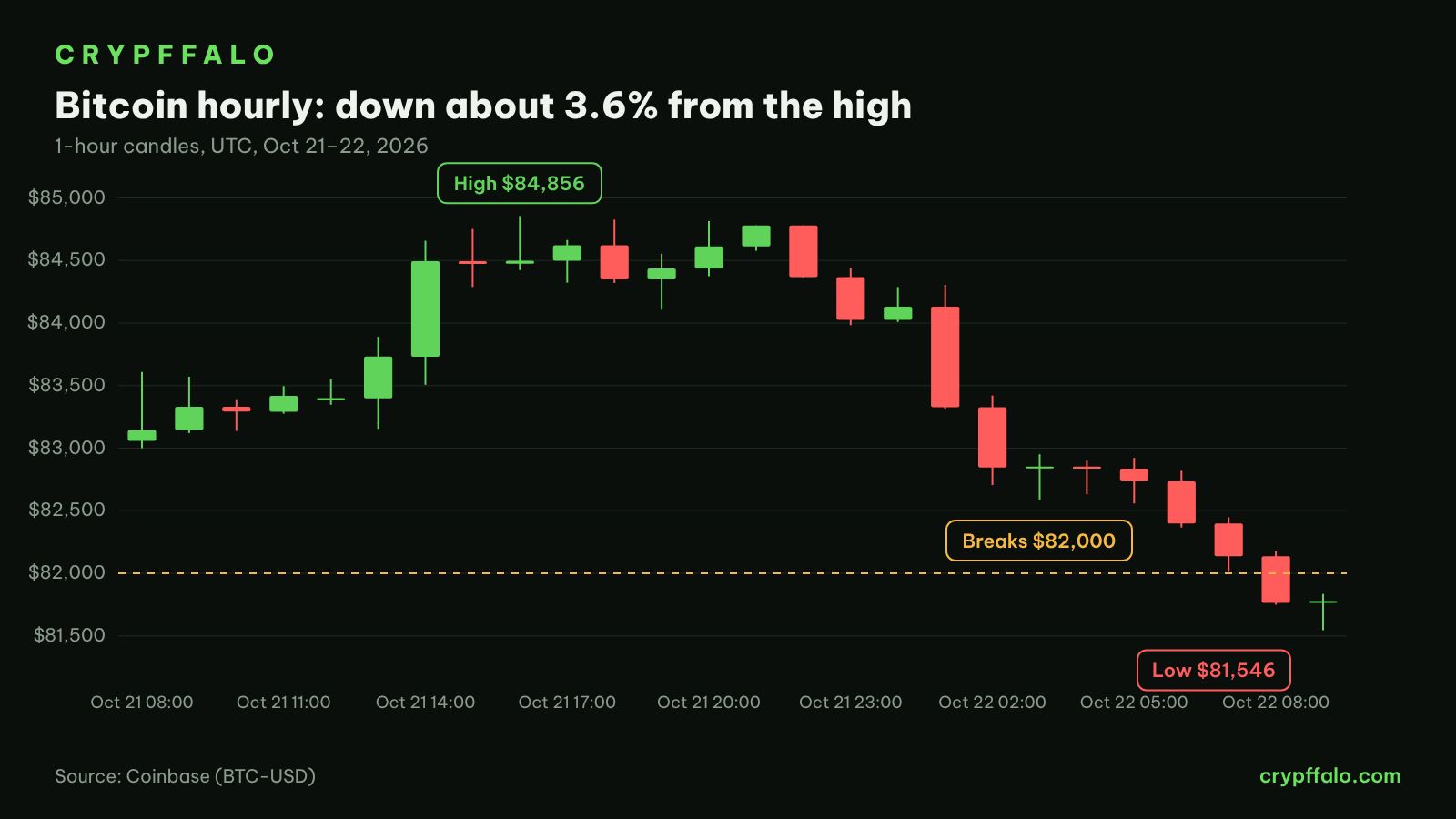
PANews, citing OKX data, reported BTC broke below $82,000 around 08:30 UTC, down 3.02% on the day. ETH also eased from about $2,520 to near $2,400.
What it means for crypto markets
Higher oil tends to keep inflation sticky, which weakens the case for Fed rate cuts. That weighs on risk assets such as tech stocks and bitcoin, especially after September U.S. inflation came in hotter than expected.
- Bull case: tensions cool, oil retreats and spot bitcoin ETFs keep attracting net inflows as in recent sessions, helping BTC hold the $80,000–$82,000 zone.
- Risk case: further strikes on oil infrastructure or disruption in the Strait of Hormuz push Brent higher, and BTC retests the $80,000 level it briefly lost on Oct 15.
Bitcoin has traded in a relatively tight range through October. Today's reaction suggests the market is more sensitive to geopolitical headlines than to crypto-specific news.
What to watch next
- Developments in the Gulf and shipping traffic through the Strait of Hormuz.
- Whether Brent holds the $110–$112 area during the U.S. session.
- Spot bitcoin ETF flows for Oct 22.
- The Fed meeting on Oct 27–28 and the U.S. midterms on Nov 3.
- Track it on our economic calendar and real-time liquidations pages.
Frequently Asked Questions
Why does rising oil push bitcoin lower?
Expensive oil makes inflation harder to bring down, which makes Fed rate cuts less likely. Investors then tend to trim risk assets, including crypto.
Has the U.S. struck Iran?
No. According to The New York Times, the plans are for the period after the Nov 3 elections, and the White House has not confirmed them.
Which bitcoin price levels are traders watching?
The $80,000 area, which BTC briefly lost and then reclaimed on Oct 15, and the $84,000–$85,000 zone that capped the latest rebound.
*This content is for information only and is not financial advice.*
Tags: Bitcoin, Oil, Iran, Geopolitics
Related articles
- Trump says US looking into Binance hack as CFTC chair pushes offshore oversight
- Crypto stocks slide: Coinbase drops 12%, Strategy 11% as Binance hack weighs
- Binance sets aside $6.34 billion in corporate funds to cover hack losses
- Bitcoin Falls Below $77,000 as Binance Hack Triggers $1.5B in Liquidations
- Binance confirms $6.3 billion hack as analysts point to North Korea's Lazarus
- Binance Wallet Moves $2.5B to Fresh Address in Suspected Hack; Bitcoin Slips to $79K