Bitcoin Falls Below $72,000 as Jensen Huang Quits Nvidia; $656M Liquidated
Author: Crypffalo Research · 21:57 12/11/2026
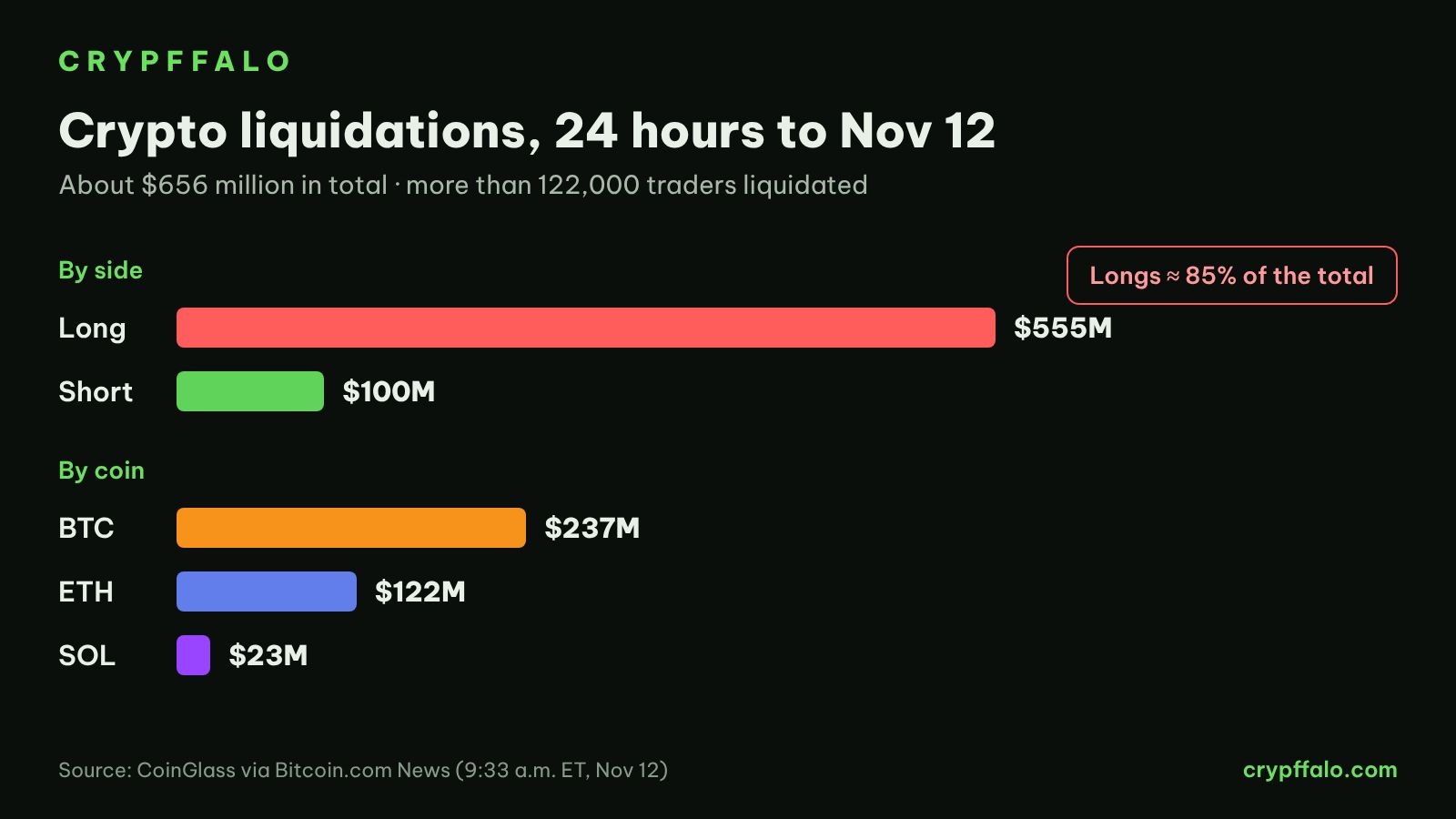
Bitcoin slid to about $71,670 on Nov 12, its lowest since mid-August, after Jensen Huang resigned as Nvidia CEO. Crypto liquidations hit $656 million in 24 hours, mostly longs.

Bitcoin dropped below $72,000 on Thursday, Nov 12, touching roughly $71,670 at about 9:30 a.m. ET. That is the lowest level for BTC since mid-August, according to Bitcoin Magazine.
The slide followed Nvidia's announcement that Jensen Huang had resigned as president, CEO and board member. Crypto liquidations over 24 hours reached about $656 million, with longs making up roughly 85%, according to CoinGlass data.
Key takeaways
- Price: BTC fell to about $71,670, down from above $76,000 earlier in the week; ETH slipped to around $2,000.
- Trigger: Huang left Nvidia effective immediately; NVDA shares fell about 10% to 13% at the open.
- Liquidations: about $656 million in 24 hours, with more than $555 million in longs and over $100 million in shorts.
- Macro: the 2-year Treasury yield rose 7.2 basis points to 4.80%, and traders see a December Fed hike as near-certain.
- Flows: US spot bitcoin ETFs shed $299.8 million on Nov 11, a fifth straight day of net outflows.
What happened at Nvidia
At around 8:53 a.m. ET on Nov 12, Nvidia said Huang was stepping down as CEO and leaving its board, effective immediately. CFO Colette Kress was named interim CEO and will keep her finance role.
The board said it will look at both internal and external candidates for a permanent chief. Harvey C. Jones was named chair.
Nvidia did not give a specific reason. US media had reported on Huang's extramarital relationships, including one that raised national security concerns in Washington.
- NVDA shares: down about 10% per CoinDesk, with Bitcoin Magazine putting the opening drop near 13%.
- Chip spillover: Intel, Marvell and Micron fell about 5% to 7.5%; CoreWeave lost about 16%.
- Index futures: Nasdaq 100 futures were down about 1.4% and S&P 500 futures about 0.7%.
- Earnings date: Nvidia still plans to report third-quarter results on Nov 17.
Crypto liquidations and fund flows
The sharpest wave of selling hit around 8:15 a.m. ET, when roughly $223 million in positions were liquidated in a single hour. According to TokenPost, almost 98% of that was longs, and BTC accounted for about $171 million.
Over 24 hours, more than 122,000 traders were liquidated. A notable single order was a BTC long worth about $31.09 million on Hyperliquid, closed near $72,250.
ETF selling added to the pressure. US spot bitcoin ETFs posted $299.8 million in net outflows on Nov 11, bringing the five-day total to about $1.44 billion. BlackRock's IBIT alone lost $269.7 million, its ninth consecutive day of outflows.
Strategy (MSTR) shares also fell about 4% to 7% after MSCI confirmed the company will be dropped from its indexes at the Nov 30 close.
Crypffalo data view
Crypffalo's DeepDom data for the 24 hours to 9:00 p.m. GMT+7 on Nov 12 shows selling pressure concentrated in derivatives. See more on DeepDom and real-time liquidations.
- Price: BTC's latest hourly close was $72,476, down 1.76% over 24 hours; ETH was at $2,011.6, down 2.23% → the two majors fell in step.
- Liquidations: BTC saw $45.5 million in long liquidations versus $18.0 million in shorts; ETH saw $36.6 million versus $10.4 million → longs took most of the losses.
- Taker flows: BTC futures net flow was about -$691 million while BTC spot was +$14.5 million; ETH was -$375.2 million on futures and -$76.4 million on spot → sellers dominated futures.
- Order book ±1%: BTC showed $231.1 million in bids against $179.3 million in asks; ETH showed $85.3 million against $88.1 million → the BTC book leaned to the bid side, ETH was roughly balanced.
The data matches what news reports describe: selling came mainly through futures and long liquidations, while BTC spot did not see matching liquidation-driven selling.
What it means for crypto markets
BTC has lost $72,700, the low set after the Nov 10 CPI report, and trades below the 50-week moving average near $75,153 cited by CoinDesk. Wintermute flagged $68,000 as the next area of interest.
- Bull case: markets absorb the Nvidia shock ahead of its Nov 17 earnings, ETF outflows slow and BTC reclaims the $72,700 to $75,000 range.
- Risk case: tech stocks keep sliding, short-term yields climb further and ETF outflows persist, pushing BTC toward the $68,000 area.
The wider backdrop remains tough: October inflation came in hotter than expected, the dollar has firmed and expectations of further Fed tightening are weighing on risk assets.
What to watch next
- Nvidia and AI stocks in the coming sessions, plus news on a permanent CEO.
- Nvidia's third-quarter results on Nov 17.
- Spot bitcoin ETF flows, especially IBIT's outflow streak.
- The Fed's December policy meeting and remarks from Fed officials.
- Live liquidations on real-time liquidations and macro dates on the economic calendar.
Frequently Asked Questions
Why does Nvidia news move Bitcoin?
Bitcoin has been trading closely with tech and AI stocks lately. When NVDA drops sharply, overall risk appetite fades and leveraged crypto longs get liquidated in a chain.
Who is running Nvidia now?
CFO Colette Kress is interim CEO while the board searches for a replacement. Harvey C. Jones serves as board chair.
Is $656 million in liquidations a large figure?
It is a notable 24-hour total, but below the $1 billion-plus waves seen earlier in November. The standout detail is that about 85% hit long positions.
*This content is for information only and is not financial advice.*
Tags: Bitcoin, Nvidia, Liquidations, ETF, Fed
Related articles
- Bitcoin slides to $61,300, lowest since July, as liquidations top $600 million
- Sky's USDS sees $1.5B USDC exodus after North Korea-linked flows report
- Bitcoin tests $64,000 then slips as Anthropic opens 34% above its record IPO price
- Nvidia beats with $115.8B revenue, but Bitcoin barely moves near $64,500
- Solana Foundation takes majority stake in CoinGecko, eyes onchain trading
- Fed's Musalem sees several rate hikes by spring 2027 as US retail sales beat forecasts